Melasma, PIH and Dark Spots: A Brightening Routine That Actually Works
Hyperpigmentation is one of the most common — and most frustrating — concerns for Indian skin. Here is how to fade it without irritating your barrier.
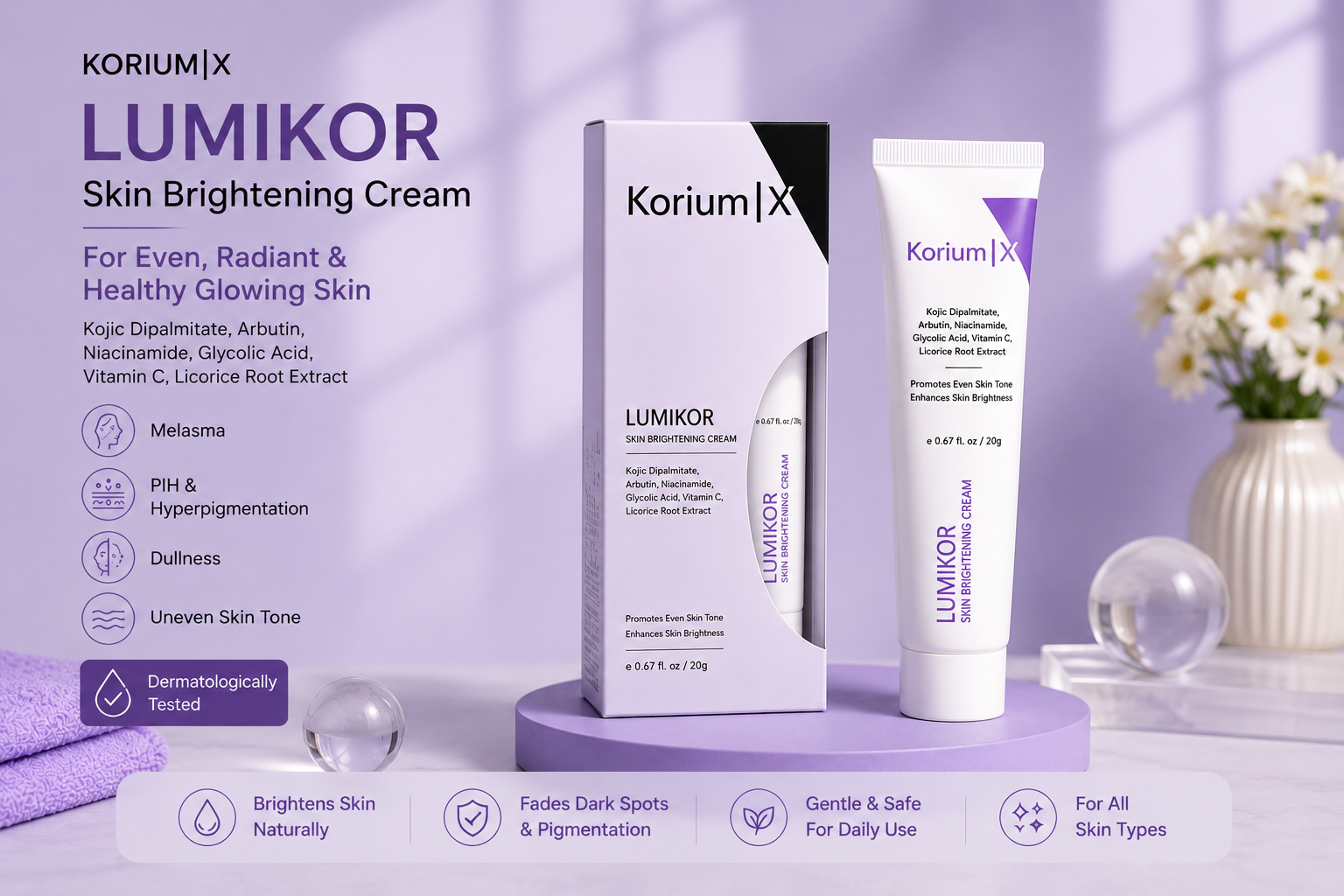
If you have been chasing an even skin tone for months, you are not alone. Melasma, post-inflammatory hyperpigmentation (PIH) and sun-triggered dark spots are some of the most common reasons people start a serious skincare routine — and also some of the slowest to improve. The good news: with the right actives and a little patience, visible change is absolutely possible.
Why pigmentation happens
Pigmentation is your skin producing extra melanin, usually in response to sun exposure, inflammation (like acne), or hormonal triggers. That is why two people can use the same product and see very different timelines — the underlying cause matters.
The actives that help
- Kojic acid and arbutin gently slow excess melanin production.
- Niacinamide evens tone and calms the inflammation that drives PIH.
- Glycolic acid resurfaces dull, pigmented cells so brighter skin shows through.
- Vitamin C and licorice add antioxidant protection and a natural glow.
Our Lumikor Skin Brightening Cream brings all of these together in one pea-sized step.
The non-negotiable: sunscreen
No brightening routine works without daily SPF. Sun exposure undoes weeks of progress in days. Pair your treatment with a broad-spectrum sunscreen like KoriumX Sun SPF 50 every single morning.
Give any pigmentation routine 8–12 weeks before judging results, and introduce actives slowly to keep your barrier happy.