Isotretinoin for Severe Acne: What to Expect and How to Stay Safe
For deep, scarring or treatment-resistant acne, isotretinoin can be life-changing — but it is a serious medicine that needs a doctor.
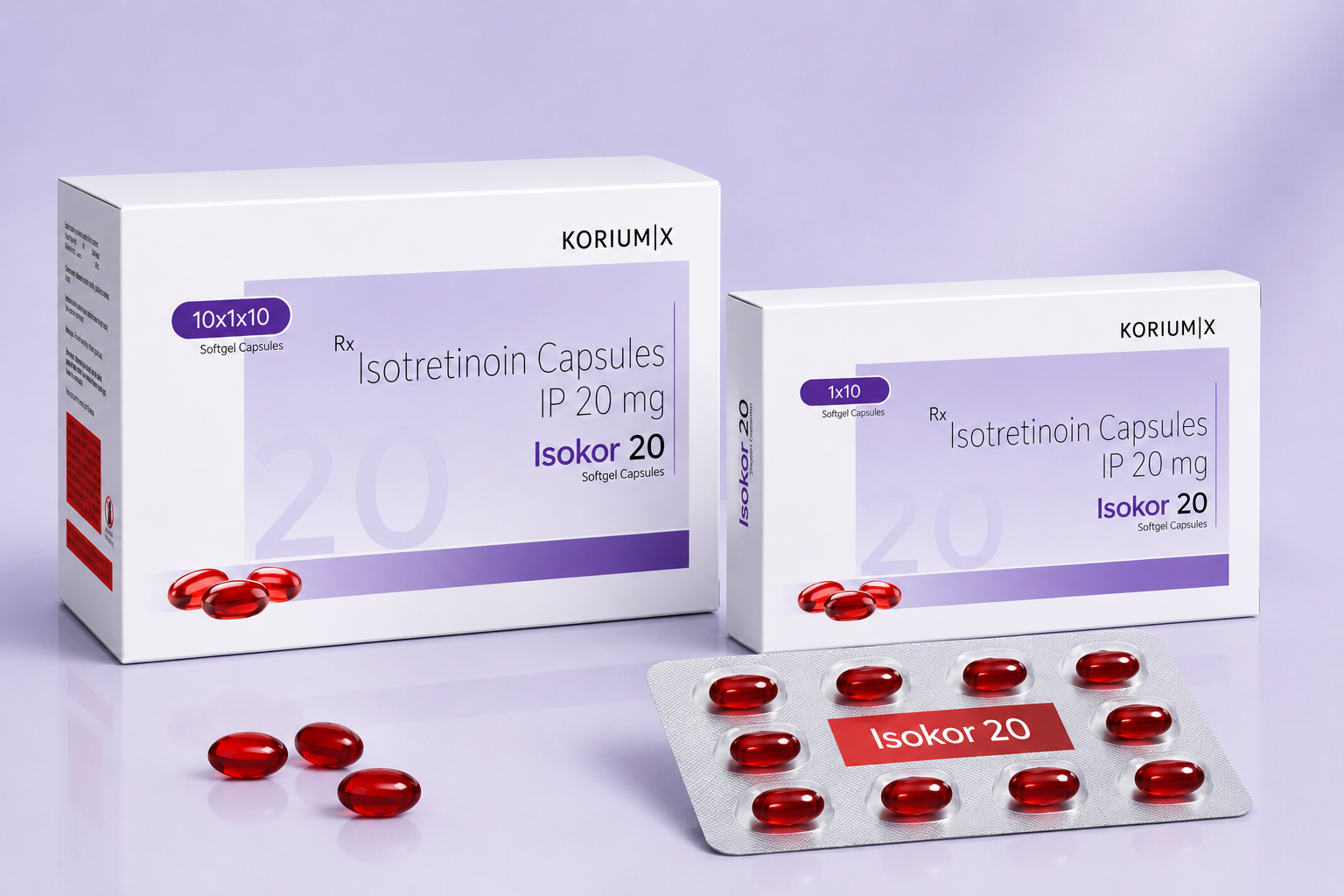
When breakouts are deep, painful and leaving scars — and creams, face washes and antibiotics have not worked — dermatologists often turn to isotretinoin. It is one of the most effective acne treatments we have, but it is also a medicine that demands respect and supervision.
How it works
Isotretinoin (the active in Isokor 20) shrinks oil glands, reduces acne-causing bacteria and calms inflammation. Many people see long-lasting clearance after a full course.
What to expect
- An initial purge or dryness in the first weeks is common.
- Lips, skin and eyes often feel dry — a good lip balm and moisturiser become daily essentials.
- Your dermatologist will monitor you with periodic blood tests.
Why it is prescription-only
Isotretinoin is a known teratogen — it must never be used during pregnancy or while planning one. It also interacts with other medicines and requires monitoring. That is why we ask for a valid prescription before processing any order, and why this is a conversation to have with your doctor, not the internet.
Bottom line: isotretinoin clears severe acne better than almost anything else — when used correctly, under a specialist who knows your history.